How long does it take to join the British Army, Royal Navy or Royal Air Force in 2026? A realistic timeline guide

Many applicants ask how long it takes to join the UK Armed Forces, whether they are applying to join the British Army, Royal Navy or Royal Air Force. A common question is:
“If I apply now, when will I actually start Basic Training?”
The honest answer is that it depends. But in many cases the process takes longer than applicants expect.
This guide explains what current publicly reported information suggests, why timelines vary, and how to think about your preparation during the waiting period.
What the Data Says About UK Military Recruitment Timelines
Across the UK Armed Forces, applicants must progress through several stages before beginning Phase 1 training, often referred to as Basic Training.
- Application submission
- Initial eligibility checks
- Medical screening
- Fitness testing
- Assessment centre
- Security clearance
- Allocation to an available training intake.
Recent public reporting has referenced median recruitment timelines, sometimes called “Time of Flight”, ranging from approximately:
- 8 to 12 months for many Regular pathways
- Longer in some Reserve pipelines
- Variations depending on role demand and intake capacity
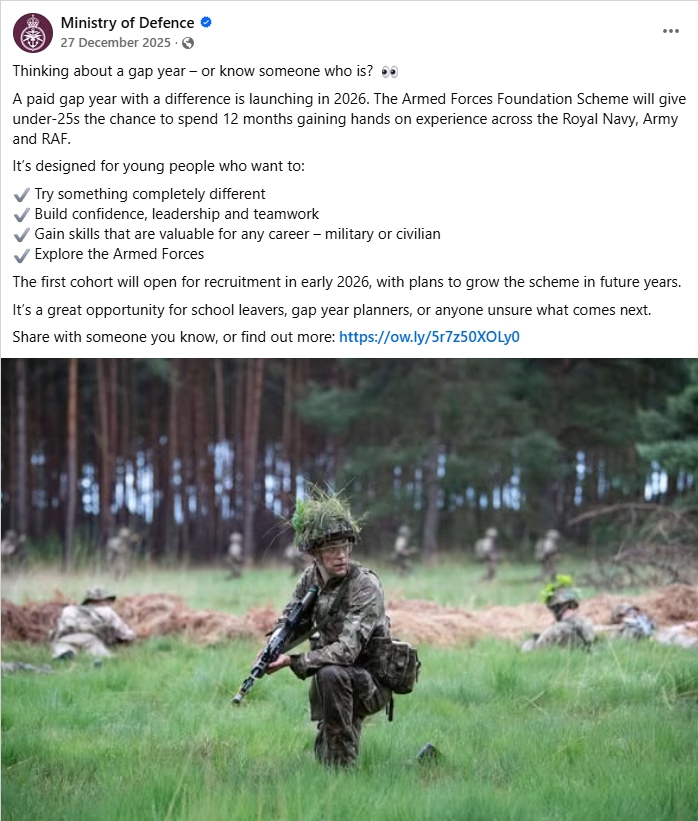
- New pathways such as the Armed Forces Foundation Scheme, with the Army’s first intake beginning in September 2026.
These timelines are not guarantees. They represent broad estimates, meaning some candidates progress faster while others wait considerably longer.
Delays in recruitment pipelines have been a persistent feature of UK Armed Forces recruiting for decades.
For example, in the late 1990s one recruit waited around eight months to join the Royal Navy. Nearly twenty years later, another applicant waited fourteen months between applying and starting training with the Army Reserve.
The key lesson is simple: applicants should prepare for a process that may take many months.
Why Does It Take So Long?
Recruitment into the Armed Forces is different from applying for a typical civilian job.
- Medical screening requirements
- Security clearance checks
- Availability of specific roles
- Training intake capacity
- Administrative workload across recruitment teams.
Even if you pass every stage quickly, you may still need to wait for the next available training intake for your chosen role.
The Real Risk: Passive Waiting
The waiting period can become the hardest part of the recruitment process.
- Fitness can plateau or decline
- Motivation can fluctuate
- Confidence can dip
- Misinformation spreads easily online
This is where many capable candidates lose momentum. Not because they are unsuitable for military service, but because time passes without structure, direction or accountability.
A Practical Way To Understand Your Likely Timeline
One of the biggest frustrations for applicants is uncertainty.
Many people simply want a rough indication of what their recruitment pathway could realistically look like based on current publicly discussed timelines and open-source information.
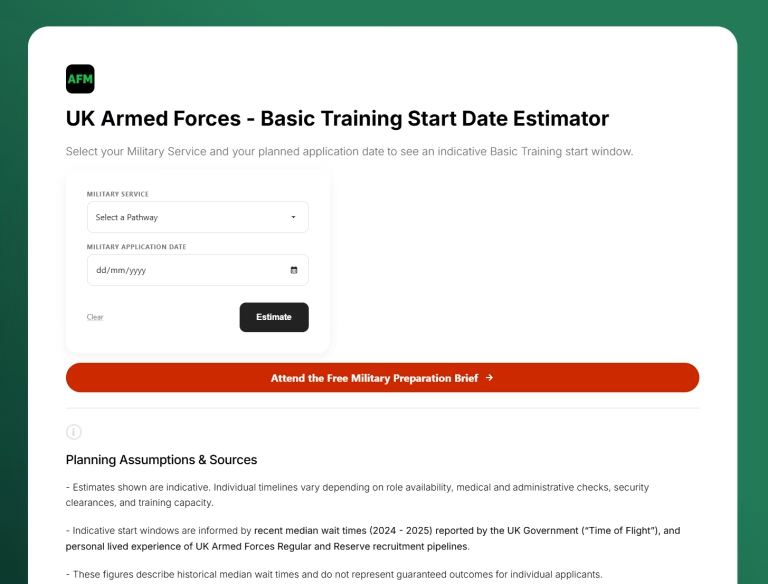
To help with this, Armed Forces Mentoring has developed a UK Armed Forces Basic Training Start Date Estimator covering the British Army, Royal Navy and Royal Air Force, including those exploring the new Armed Forces Foundation Scheme route.
The estimator does not provide official joining dates or guarantees. Instead, it is designed to help applicants better understand likely timelines so they can plan fitness, work, education and life commitments more effectively whilst preparing for military service.
Explore the UK Armed Forces Basic Training Start Date Estimator.
Army Reserve Recruitment Attrition: Higher than Special Forces Selection
Recent figures indicate:
- Approximately 54% of Regular applicants do not reach enlistment.
- Around 30,000 Army Reserve applications resulted in only around 1,300 untrained entrants in 2024/25 – approximately 4%.
These figures reflect pipeline attrition rather than selection failure.
Recent reporting has highlighted how significant the issue has become. A UK Defence Journal article reported that only around 4 in 100 Army Reserve applicants became untrained entrants in 2024/25, demonstrating the scale of attrition through the recruitment pipeline.
To put that into perspective, this level of attrition is higher than that seen in some Special Forces selection processes.
Joining the Army Reserve should not have a higher attrition rate than attempting to join Special Forces.
High standards are an essential part of military recruitment. But when this many applicants disappear from the pipeline, the important question is not simply how many leave. It is where they leave and why.
You can also read more about these statistics in our article on UK military recruitment delays and drop-out rates.
You Cannot Control the Timeline, But You Can Control Your Preparation
You cannot control every part of the recruitment system.
You cannot personally speed up medical screening, security clearance, assessment availability or training intake capacity.
But you can control how you use the waiting period.
- Improve service-specific fitness
- Build resilience and discipline
- Increase knowledge of your chosen Service
- Clarify motivations and long-term goals
- Arrive at training better prepared.
A Structured Approach to the Waiting Period
Armed Forces Mentoring helps applicants prepare for military training with structure and purpose.
Whether you are preparing to apply or already progressing through recruitment, use the time to identify where you are now, understand the gaps in your preparation and take practical action to get yourself ready for training.
If you are still researching whether you are eligible, you may also want to read our guide on the age requirements for joining the UK Armed Forces.
If you are already applying, planning to apply, or supporting a young person through the process, you can book a short 20-minute Military Preparation Strategy Call.
Final Thoughts
Joining the British Army, Royal Navy or Royal Air Force is a serious commitment.
You cannot control every stage of the recruitment pipeline.
But you can control your preparation.
Use the waiting period wisely.
Prepare with Purpose.