What Is the Armed Forces Foundation Scheme? (UK Military Guide 2026)
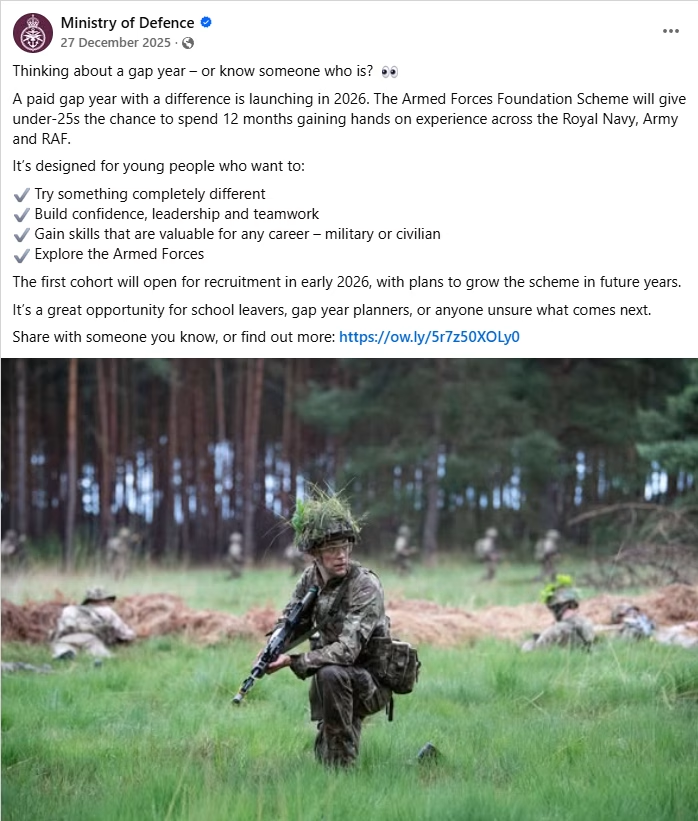
Announced in December 2025, the Armed Forces Foundation Scheme (AFFS), often described as the UK Armed Forces “gap year”, is a new route designed to give young people the opportunity to experience military life without immediately committing to a long-term Armed Forces career.
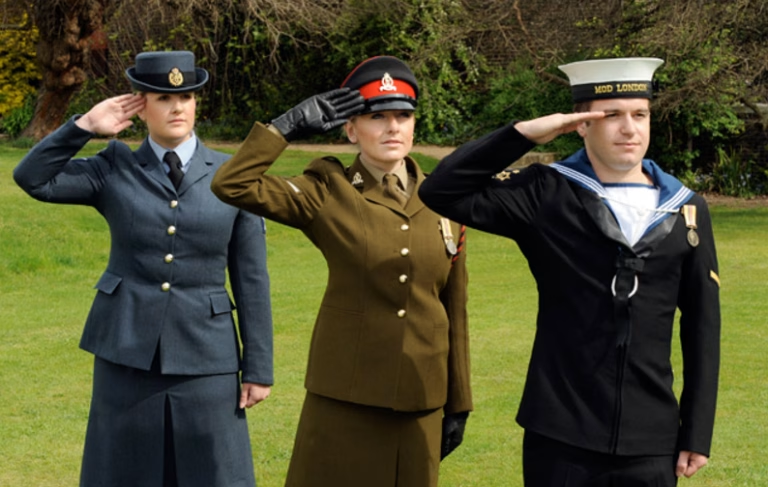
The scheme is being developed across the British Army, Royal Navy and Royal Air Force, with different programmes planned for each Service.
The British Army has now confirmed that its first Armed Forces Foundation Scheme intake will begin in September 2026. Its scheme offers 18 months of paid service in selected Army roles, including full training and experience in an Army unit.
What Is the Armed Forces Foundation Scheme?
The Armed Forces Foundation Scheme is a pilot programme designed to give young people experience of military service without requiring an immediate long-term career commitment.
The exact programme differs between the three Services. The British Army scheme lasts 18 months, while the Royal Navy and Royal Air Force are developing one-year programmes.
Participants can expect a combination of:
- paid military service
- military training
- practical experience
- leadership and teamwork development
- experience of day-to-day military life
The aim is to give participants genuine experience of the Armed Forces before deciding what they want to do next. For some, that may lead to a longer military career; for others, it may provide valuable experience before returning to civilian life.
Initial Participation Numbers (Tranche 1)
The Armed Forces Foundation Scheme is initially being introduced as a pilot programme, with the first cohort known as Tranche 1.
The Ministry of Defence has said that Tranche 1 is expected to include 150 participants across the three Services:
- British Army: 110
- Royal Navy: 20
- Royal Air Force: 20
The purpose of the first tranche is partly to test the scheme and learn what works before future cohorts are developed. The MOD has allocated £13 million to deliver the initial pilot.
The longer-term ambition is considerably larger, with the Government indicating that the scheme could eventually expand to more than 1,000 participants, subject to demand and lessons learned from the pilot.
What Will Participants Do?
The structure of the Armed Forces Foundation Scheme will differ between the three Services.
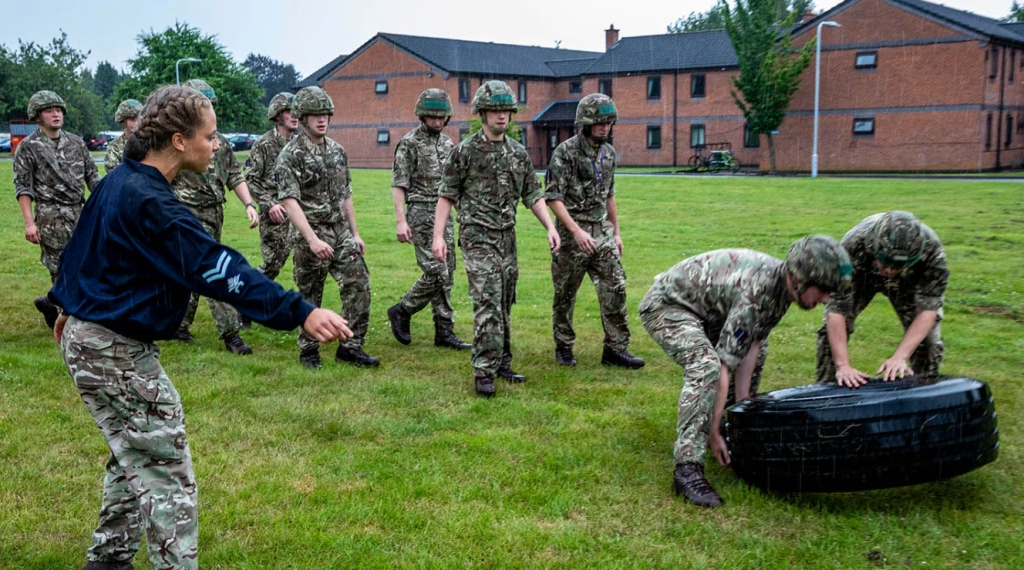
The British Army has now confirmed that its scheme will last 18 months. Participants will join as soldiers, complete full Army training and then gain real experience serving within an Army unit.
The Army scheme is currently available in selected roles:
- Infantry (excluding Paratrooper / the Guards)
- Royal Artillery
- Royal Logistic Corps – Supply Chain Operative
- Adjutant General’s Corps – HR Specialist
If you are interested in the Army Foundation Scheme, apply through the normal Army recruitment process and make your interest in AFFS clear during recruitment. Current information suggests that the initial intake may be drawn from applicants already progressing through the Army recruitment pipeline.
Army participants will be paid from day one, with a salary of £25,018.44, and receive benefits including a pension, healthcare, free gym access and subsidised food and accommodation.
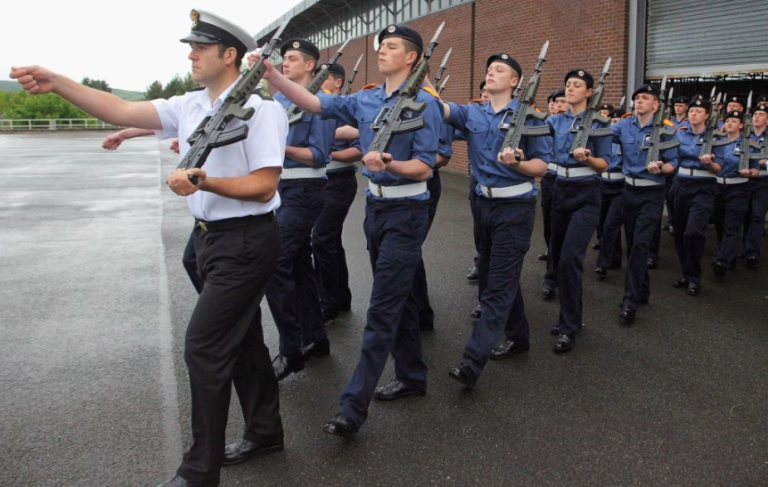
The Royal Navy is developing a one-year programme involving Phase 1 training at HMS Raleigh, followed by experience serving onboard Royal Navy ships.
The Royal Air Force is also developing a one-year programme intended to give participants experience working alongside Regular personnel across a range of RAF professions.
This means AFFS is not simply a military work-experience programme. Participants will undertake military training and gain first-hand experience of Service life before deciding what they want to do next.
Why the Scheme Is Being Introduced
The programme was announced in December 2025 as part of broader efforts to strengthen recruitment pathways into the Armed Forces and reconnect society with military service.
One of the ideas behind the scheme is to give young people who are interested in military life, but unsure about making a long-term commitment, an opportunity to experience Service life first-hand.
The then Defence Secretary John Healey MP described the initiative as part of a new era for defence, with the scheme also supporting the Government’s broader “whole-of-society” approach to defence highlighted in the Strategic Defence Review.
The wider aim is therefore not simply recruitment. It is also about increasing understanding of the Armed Forces and strengthening the connection between the military and wider society.
Inspired by the Australian Defence Force Gap Year
The UK programme has been influenced by the Australian Defence Force Gap Year scheme, which has operated successfully for more than a decade.
The Australian model allows young people to spend a year in military service before deciding whether to continue their career.
Evidence from Australia suggests that such programmes can help attract new recruits by lowering the barrier to entry for those unsure about committing to a full military career.
How will Participants be supported?
Joining the Armed Forces is a significant transition, regardless of age or background. For younger participants, particularly those moving directly from school or college, the Armed Forces Foundation Scheme may also represent their first experience of full-time employment and living away from home.
Although the Armed Forces Foundation Scheme is new, participants will still be entering established military training environments with existing systems for training, supervision, healthcare and welfare support.
As the pilot develops, the Ministry of Defence will also be able to learn from the first cohort and refine how the scheme supports participants throughout their training and Service experience.
Will Participants Become Full-Time Soldiers, Sailors or Aviators?
The Armed Forces Foundation Scheme is designed to give participants genuine military experience without requiring them to commit to a long-term Armed Forces career from the outset.
Some participants may decide that military life is right for them and choose to continue serving after completing the scheme. Others may decide to return to civilian life, taking the skills, experience and confidence they have developed with them.
The Ministry of Defence has not set a specific target for how many participants should remain in the Armed Forces after completing the programme. The initial pilot will help Defence understand how participants progress and inform the future development of the scheme.
Final Thoughts
The Armed Forces Foundation Scheme offers an interesting new route for young people who are attracted to military life but are not yet certain that they want to make it a long-term career.
For the first time, applicants will have a structured opportunity to train, serve and experience military life before deciding what comes next.
But joining through the Foundation Scheme still means joining the Armed Forces. Applicants will need to meet the required standards and should approach the opportunity properly prepared.
Do not wait for a start date before you begin preparing. Use the recruitment period to improve your fitness, research your chosen Service and role, organise your personal administration and develop the routines and discipline that will help you succeed in training.
Prepare with Purpose.
Further Reading
If you’re considering joining the Armed Forces, these guides may also help:
- How Long Does It Take to Join the British Army, Royal Navy or Royal Air Force in 2026? A Realistic Timeline Guide
- The Five Biggest Challenges Applicants Face When Joining the British Army, Royal Navy or RAF
- How Military Planning Tools Can Help You Prepare to Join the Armed Forces
These articles explain the recruitment process in more detail and highlight the practical steps applicants can take while preparing for military service.
Get Ready to Join the Armed Forces
Deciding to join the Armed Forces is only the start. What you do while your application progresses matters.
Armed Forces Mentoring helps applicants prepare with purpose for the British Army, Royal Navy and Royal Air Force, focusing on the areas that can make a real difference before training begins:
- physical preparation and fitness
- routine, discipline and personal organisation
- understanding your chosen Service and role
- preparation for interviews, assessments and training
- accountability and structured planning
Whether you are applying through the Armed Forces Foundation Scheme or the normal Regular or Reserve recruitment route, the aim is the same: use the time you have now to arrive better prepared for what comes next.
Visit AFMentoring.com to explore our mentoring programmes, practical guidance and preparation resources.
Prepare with Purpose.